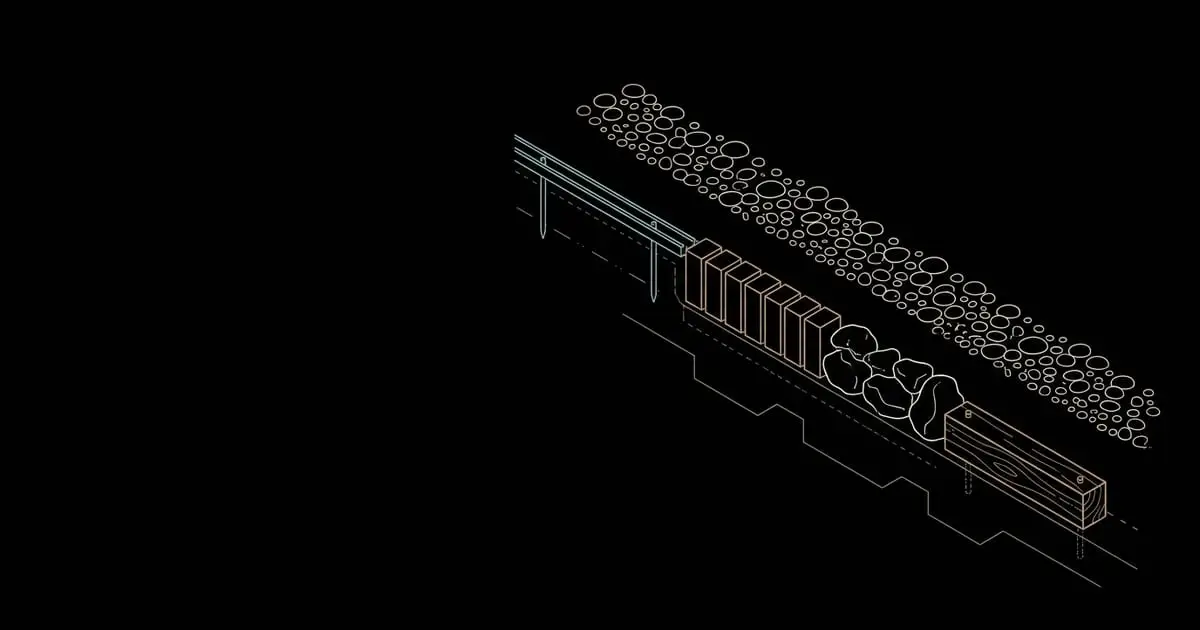
If there’s one rule with pea gravel, it’s this: edge it. Round stones roll, and without a border they end up in the lawn, the flower beds and the mower. The right edging also makes a gravel area look finished instead of temporary. Here are ten options and how much to buy. The pea gravel calculator shows the edging length for every area you add.
What good gravel edging does
- Holds the stone in its area.
- Keeps grass and soil out of the gravel.
- Sits about 1/2 inch above the gravel, so stones don’t spill over.
- Goes deep enough into the ground to stay put through frost and mowing.
10 gravel edging ideas
1. Steel edging
Thin, strong, and bends into smooth curves. Rusts to a brown patina (Corten) or comes powder-coated black. The top choice for modern gardens.
2. Aluminum edging
Like steel but lighter and rust-free. Easy to cut and bend for DIY.
3. Heavy plastic or composite edging
Cheap and flexible. Choose a thick, rigid type with stakes; thin “lawn edging” rolls pop out of the ground. Fine for paths and beds.
4. Paver restraint edging
The L-shaped plastic edging used for paver patios also holds gravel well, pinned with long spikes.
5. Brick on edge (soldier course)
Bricks set upright in a row give a classic cottage look. Set them in a trench on a little gravel or mortar so they don’t lean.
6. Natural stone
Flagstone pieces, fieldstone or cobbles along the edge. Beautiful, but gaps between stones let gravel through, so pair them with fabric or a hidden strip of edging behind.
7. Concrete pavers
Small pavers laid flat as a border make a mowing strip: the mower wheel runs on the pavers and never touches the gravel.
8. Pressure-treated timbers
4x4 or 6x6 timbers, pinned with rebar, hold deep gravel in play areas and dog runs. Use lumber rated for ground contact.
9. Poured or precast concrete curb
The most permanent option, used along driveways and parking pads where tires push stone sideways.
10. Living edge
Low, dense plants like creeping thyme, liriope or boxwood along a path. Soft and pretty, but they don’t stop stones on their own, so combine with a low hidden edging.
Which edging for which project
| Project | Good choices |
|---|---|
| Garden path | Steel, aluminum, brick, stone |
| Patio | Steel, paver restraint, pavers as a mowing strip |
| Driveway | Concrete curb, heavy steel, pavers set in concrete |
| Dog run, playground | Timbers, tall composite or steel |
| Garden bed mulch | Steel, plastic, brick |
| Fire pit area | Steel, stone, brick |
How much edging do you need?
Measure the outline of every gravel area:
| Shape | Edging length |
|---|---|
| Rectangle | 2 × (length + width) |
| Circle | 3.1416 × diameter |
| Ring around a fire pit | 3.1416 × (outer + inner diameter) |
| Path | Both long sides (plus ends if they meet lawn) |
Examples: a 10 × 20 ft patio needs 60 ft; a 3 × 30 ft path needs 66 ft with both ends, or 60 ft if the ends meet a patio and a step. Add a little for overlaps at joints. The calculator adds up the edging for every shape you enter.
How to install edging for pea gravel
- Mark the line with a hose or string.
- Cut a trench along it with a flat spade, deep enough for the edging to sit 1/2 inch above the finished gravel.
- Set the edging and drive the stakes at the spacing the maker gives.
- Backfill and tamp soil on the lawn side.
- Run landscape fabric up the gravel side of the edging. See landscape fabric under gravel.
- Fill with base and gravel.
Other ways to keep pea gravel in place
- Keep it thin: 2 to 3 inches over a firm base.
- Use a binder on paths and patios. See pea gravel glue.
- Use a stabilizer grid on driveways and slopes.
- Put a doormat where gravel paths meet the house.
The short version
Choose steel or aluminum for clean curves, brick or stone for a traditional look, and timbers or concrete for deep gravel and driveways. Set the top about 1/2 inch above the stone. Get your edging length from the pea gravel calculator.