Pea gravel’s biggest weakness is that it moves. The round stones roll under your feet, spill over the edging and end up in the lawn and the house. Pea gravel glue (also sold as gravel binder or stone stabilizer) is the quick fix people reach for. Here is what it does, how to apply it, and when something else works better.
What pea gravel glue does
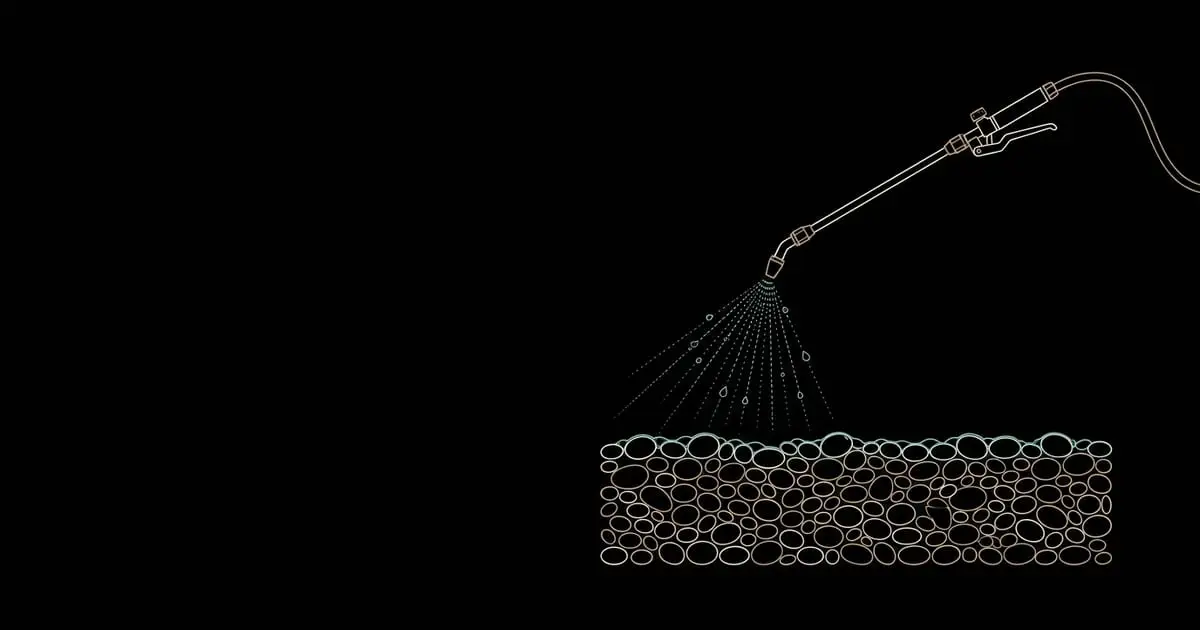
A gravel glue is a liquid binder, usually a clear polymer resin, that you spray or pour over the gravel. It runs down into the top layer and dries at the points where the stones touch. The result is a crust of pebbles bonded to each other, with the gaps between them still open.
What it does well:
- Stops stones rolling and scattering on paths and patios.
- Keeps gravel in place on gentle slopes and around steps.
- Leaves a natural look, because the binder dries clear.
- Lets rain drain through, unlike a solid surface.
What it does not do:
- It does not hold up to car tires turning on the surface.
- It does not fix a soft base. If the ground under the gravel moves, the crust cracks.
- It does not last forever. UV, frost and wear break the bond in time.
Pea gravel glue vs other ways to stop gravel moving
| Option | How it works | Best for |
|---|---|---|
| Gravel glue | Bonds the top layer of stones | Paths, patios, garden beds |
| Stabilizer grid (honeycomb panels) | Cells hold stones in place under the surface | Driveways, parking pads, wheelchairs |
| Firm base + thin layer | 2 in of pea gravel over compacted crushed stone | Every pea gravel surface |
| Good edging | Border sits above the stone | Every pea gravel surface |
The base and the edging matter most. Glue works much better on 2 inches of pea gravel over a compacted base than on 4 inches of loose stone over soil. See gravel edging ideas for borders.
How to apply pea gravel glue
Always follow your product’s label first. A typical process looks like this:
- Get the gravel right. Level it to the final depth, usually 2 inches on a patio or path. Top up thin spots now, because new stone will not bond to the glued crust later.
- Clean it. Blow off leaves and debris. Dust and dirt weaken the bond, so many people rinse the stone and let it dry.
- Wait for dry weather. Most binders need dry stone and a dry forecast for a day or more, and a minimum temperature. Check the label.
- Mask nearby surfaces. Cover siding, pavers and plants you don’t want coated.
- Apply evenly. Use a garden sprayer or a watering can as the label says, working in small sections and overlapping passes.
- Second coat if needed. Many products recommend two thin coats over one heavy one.
- Keep off it until it cures, usually a day for foot traffic. Check the label.
How much pea gravel glue do you need?
Binders list a coverage rate in square feet per gallon (or per container) at a given depth. To buy the right amount, you need the area in square feet.
For a 12 × 12 ft patio that is 144 sq ft. If your product covers, for example, 100 sq ft per gallon per coat, two coats need about 2.9 gallons, so 3 gallons. Swap in the rate on your label.
For curved paths, circles around fire pits and odd shapes, put each piece into the pea gravel calculator. It shows the total square feet at the top of the results, along with how much gravel you need for the job.
How long does it last?
There is no single answer. It depends on the product, how much sun the area gets, freeze-thaw cycles and how much foot traffic it sees. Look for:
- Stones coming loose along the edges and on the main walking line.
- A dull, chalky look as the binder ages.
When you see that, clean the area and apply a fresh coat to the worn spots. Many owners re-coat every couple of years.
Where pea gravel glue works best
- Paths and walkways, where it stops stones being kicked onto the lawn. See pea gravel walkway.
- Patios, where it makes chairs sink less. See pea gravel patio.
- Garden beds and tree rings, where it keeps stone from being washed or blown into the lawn.
- Around steps and slopes, where loose stone is a slip risk.
Skip it on driveways that see daily traffic. Tires grind and turn on the surface and break the crust quickly. For a pea gravel driveway, a stabilizer grid is the better fix.
Common mistakes
- Gluing wet or dirty stone. The bond fails within weeks.
- Too heavy a coat. Puddles of binder fill the gaps, look shiny and can block drainage.
- Gluing before the gravel settles. Let new gravel settle, rake it level and top it up first.
- Expecting a hard surface. It is a bonded crust of stones, not a slab.
The short version
Pea gravel glue works for foot traffic if the base is firm, the gravel is thin, clean and dry, and you re-coat as it wears. For anything with tires, use a grid. Before you buy binder, get your total square feet from the calculator.