By Ashish · Updated · Formulas checked against the methodology
Quick answer: cubic yards of pea gravel = length (ft) × width (ft) × depth (in) ÷ 324. Multiply by 1.4 for tons. A 10 × 20 ft patio at 3 inches needs 1.85 cubic yards (2.59 tons). With 10% extra, order 2.04 yd³, about 2.85 tons or 110 bags of 0.5 cu ft.
How to Calculate Pea Gravel
Pea gravel is sold three ways: by the bag, by the cubic yard and by the ton. All three start from the same number, the volume of the space you want to fill. Here is the method.
- Measure the area. Length × width in feet gives square feet. For odd shapes, split the space into rectangles, circles and triangles and add them up. The calculator does this with one row per piece.
- Choose the depth. Paths and patios usually take 2 to 3 inches. See the depth table for other projects.
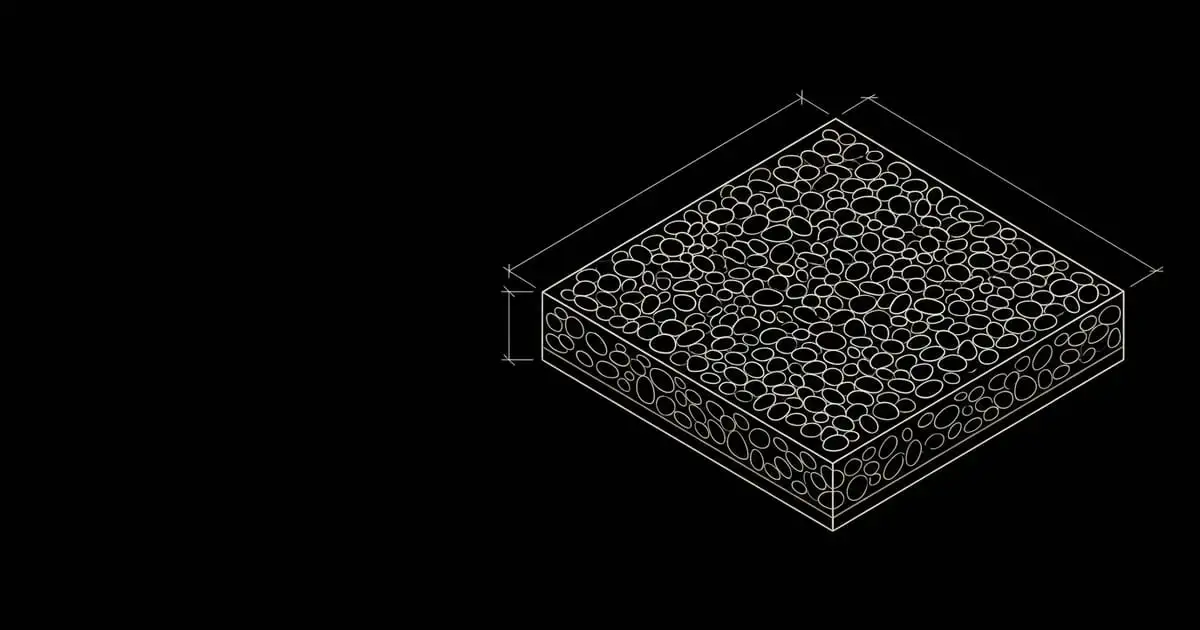
- Find the volume. Square feet × depth in inches ÷ 12 gives cubic feet. Divide by 27 for cubic yards, or do both at once: square feet × inches ÷ 324.
- Add extra and convert. Add about 10% for settling and uneven ground. Multiply cubic yards by 1.4 for tons, or by 54 for bags of 0.5 cu ft.
Worked example
A 10 × 20 ft patio, 3 inches deep:
- Area: 10 × 20 = 200 sq ft
- Volume: 200 × 3 ÷ 12 = 50 cu ft, ÷ 27 = 1.85 yd³
- With 10% extra: 1.85 × 1.10 = 2.04 yd³ (55.0 cu ft)
- Weight at 1.4 tons per yard: 2.04 × 1.4 = 2.85 tons (5,704 lb)
- Bags of 0.5 cu ft: 55.0 ÷ 0.5 = 110 bags
- Edging: 2 × (10 + 20) = 60 ft
These are the default values in the calculator above, so you can check the math yourself.
How Deep Should Pea Gravel Be?
Pea gravel is round, so it rolls under your feet if it is too deep and shows the ground if it is too thin. These depths are a good starting point. Click a project in step 2 of the calculator and it fills the depth for you.
| Project | Depth | Why |
|---|---|---|
| Garden bed | 2 in | top dressing over soil or fabric |
| Path or patio | 3 in | 2 to 3 in walks well without rolling |
| Driveway top | 4 in | over a compacted crushed-stone base |
| Dog run | 3 in | thick enough to drain, thin enough to walk on |
| Drainage | 6 in or more | around pipes, under downspouts |
| Playground | 9 in or more | loose fill, 9 in minimum |
For driveways, pea gravel works only as a thin top layer over 4 to 6 inches of compacted crushed stone; on its own it ruts. Under playgrounds, the CPSC Public Playground Safety Handbook treats loose fill such as gravel by depth and fall height and notes that loose fill compacts over time, so start deeper than the minimum and top it up. Check the handbook for the fall height of your equipment.
Pea Gravel Coverage Chart
How far one cubic yard, one ton and one bag go at each depth. Tons use 1.4 tons per cubic yard; bags are 0.5 cu ft. No extra is added.
| Depth | 1 yd³ covers | 1 ton covers | Bags per 100 sq ft |
|---|---|---|---|
| 1 in | 324 sq ft | 231 sq ft | 17 |
| 2 in | 162 sq ft | 116 sq ft | 34 |
| 3 in | 108 sq ft | 77 sq ft | 50 |
| 4 in | 81 sq ft | 58 sq ft | 67 |
| 5 in | 65 sq ft | 46 sq ft | 84 |
| 6 in | 54 sq ft | 39 sq ft | 100 |
How Many Bags of Pea Gravel? (Chart)
Bags of 0.5 cu ft for common areas at 2, 3 and 4 inches, rounded up, with cubic yards for comparison.
| Area | 2 in | 3 in | 4 in |
|---|---|---|---|
| 50 sq ft | 17 bags (0.31 yd³) | 25 bags (0.46 yd³) | 34 bags (0.62 yd³) |
| 100 sq ft | 34 bags (0.62 yd³) | 50 bags (0.93 yd³) | 67 bags (1.23 yd³) |
| 200 sq ft | 67 bags (1.23 yd³) | 100 bags (1.85 yd³) | 134 bags (2.47 yd³) |
| 300 sq ft | 100 bags (1.85 yd³) | 150 bags (2.78 yd³) | 200 bags (3.70 yd³) |
| 500 sq ft | 167 bags (3.09 yd³) | 250 bags (4.63 yd³) | 334 bags (6.17 yd³) |
| 1,000 sq ft | 334 bags (6.17 yd³) | 500 bags (9.26 yd³) | 667 bags (12.35 yd³) |
Example: 500 sq ft at 3 inches is 4.63 yd³, which is 250 bags. At that size, bulk delivery is almost always cheaper.
How Much Does a Yard of Pea Gravel Weigh?
About 1.4 tons (2,800 lb) per cubic yard for loose, dry pea gravel. That is the number most yards quote, but you will see other figures online, and they are not all wrong: stone type, moisture and how tightly the gravel is packed all change the weight.
| Setting | Tons per yd³ | lb per cu ft | When to use it |
|---|---|---|---|
| Light | 1.3 | 96.3 | dry, loose, light stone |
| Typical | 1.4 | 103.7 | loose dry pea gravel |
| Heavy | 1.55 | 114.8 | damp or compacted |
Calculators online use anything from 96 to 115 lb per cubic foot for the same stone, so their ton figures differ by up to 20%. If you buy by the ton, ask the yard how many tons they load per cubic yard and enter it as a custom weight. If you buy by the yard or by the bag, weight does not change how much you need.
Bags or Bulk?
One cubic yard is 54 bags of 0.5 cu ft, and hauling 54 bags in a car takes several trips. For a garden bed or a small path, bags are easy and there is no delivery fee. For a patio or driveway, price bulk delivery from a landscape supply yard: most sell by the ton or by the half yard, and some charge a flat delivery fee.
A driveway top layer of 12 × 50 ft at 4 inches needs 7.41 yd³, about 10.37 tons, or 400 bags. Enter your bag price, the bulk price and the delivery fee in step 3 of the calculator to see which is cheaper for your job.
FAQ
How much pea gravel do I need?
Multiply length × width (feet) × depth (inches), then divide by 324 to get cubic yards. A 10 × 20 ft patio at 3 inches needs 1.85 cubic yards, or 2.04 yd³ with 10% extra. At 1.4 tons per yard that is about 2.85 tons, or 110 bags of 0.5 cu ft.
How much does a yard of pea gravel weigh?
About 1.4 tons (2,800 lb) per cubic yard when it is loose and dry, which is the figure most suppliers quote. Published values run from about 1.3 tons (96 lb per cubic foot) to 1.55 tons (115 lb per cubic foot) for damp or compacted gravel. Ask your yard what they use, because they sell by weight.
How many square feet does a ton of pea gravel cover?
At 1.4 tons per yard, one ton covers about 116 sq ft at 2 inches, 77 sq ft at 3 inches and 58 sq ft at 4 inches.
How many square feet does a cubic yard of pea gravel cover?
One cubic yard covers 162 sq ft at 2 inches, 108 sq ft at 3 inches and 81 sq ft at 4 inches. The formula is 324 ÷ depth in inches.
How many bags of pea gravel are in a yard?
A cubic yard is 27 cubic feet, so it takes 54 bags of 0.5 cu ft. With 50 lb bags it depends on the stone weight: at 1.4 tons per yard, a yard weighs 2,800 lb, which is 56 bags of 50 lb.
How many bags of pea gravel do I need for 100 square feet?
At 2 inches deep, 100 sq ft needs 16.7 cu ft, which is 34 bags of 0.5 cu ft. At 3 inches it is 50 bags. Add about 10% for settling.
How much pea gravel do I need for a 12x12 patio?
A 12x12 patio is 144 sq ft. At 3 inches deep that is 36 cubic feet, or 1.33 cubic yards. With 10% extra, order about 1.47 yards: roughly 2.05 tons or 80 bags of 0.5 cu ft.
How much does a bag of pea gravel weigh?
A 0.5 cubic foot bag weighs about 52 lb at a typical 1.4 tons per cubic yard, and anywhere from about 48 to 57 lb depending on the stone and moisture. A 50 lb bag holds just under half a cubic foot.
What size pea gravel is best for a patio?
About 3/8 inch, the standard pea gravel size. It is comfortable underfoot, easy to find and works over a compacted base. The same size suits paths, dog runs and drainage.
How deep should pea gravel be?
About 2 inches for top dressing a garden bed, 2 to 3 inches for paths and patios, 3 to 4 inches as the top layer of a driveway over a compacted base, and 9 inches or more of loose fill under playground equipment. Deeper than 3 to 4 inches on a walking surface feels like sand underfoot.
Is it cheaper to buy pea gravel in bags or in bulk?
Bags win for small jobs of a few dozen bags because there is no delivery fee. Past about a cubic yard (54 bags of 0.5 cu ft), bulk from a landscape yard is usually cheaper, even with delivery. Enter both prices in step 3 of the calculator to see the answer for your job.
How do I calculate pea gravel for a circle?
Area of a circle = 3.1416 × (diameter ÷ 2)². A 10 ft circle is 78.5 sq ft; at 3 inches deep that is 19.6 cu ft, or 0.73 cubic yards. For a ring around a tree or fire pit, subtract the inner circle. Pick "Circle" or "Ring" in the calculator.
Do I need landscape fabric under pea gravel?
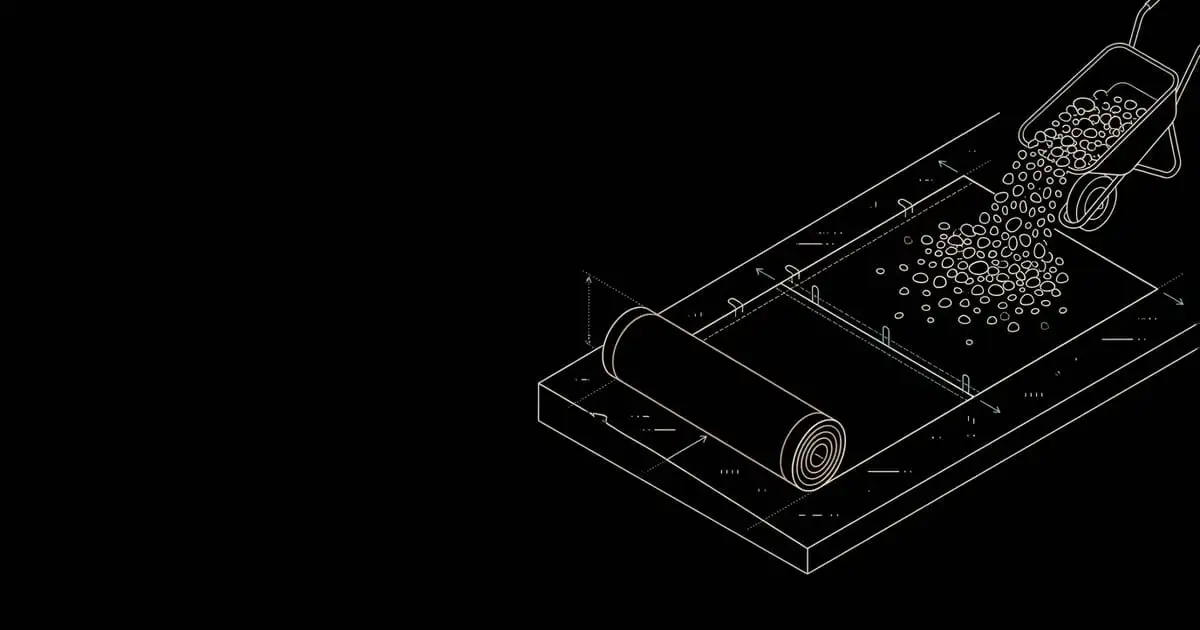
Fabric is not required, but it keeps the stone from sinking into the soil and slows weeds from below. Most paths and patios use it. Overlap the seams by about 6 inches; the calculator adds 10% for overlap by default and tells you how many rolls to buy.