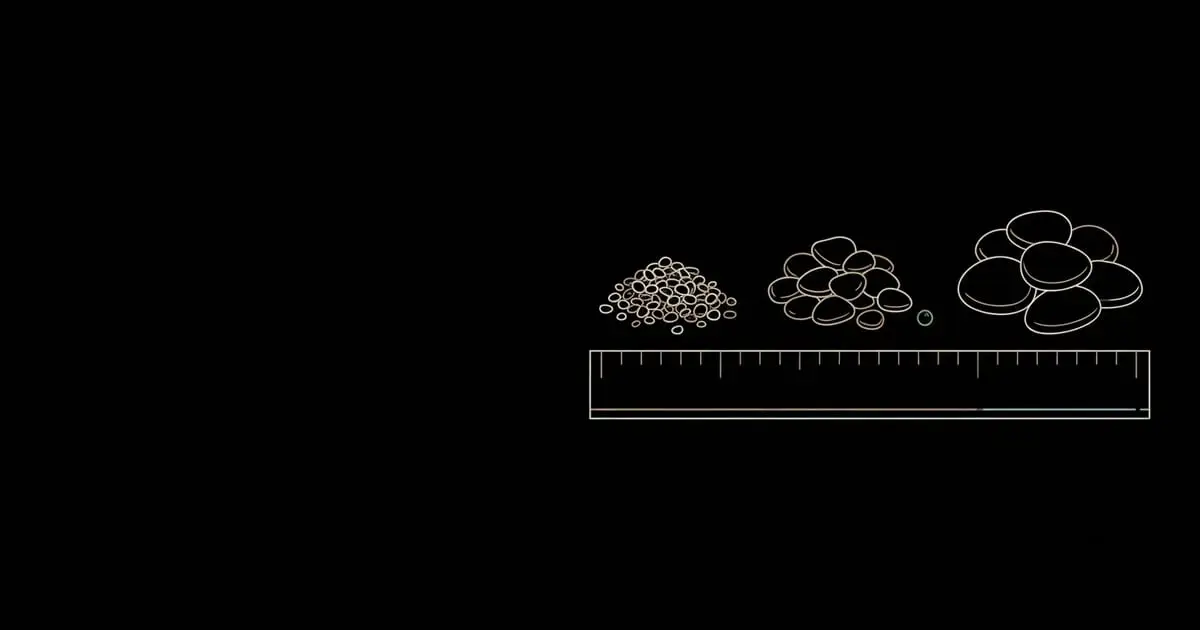
“Pea gravel” describes a shape and a rough size: small, smooth, rounded stones about the size of a pea. But sizes vary by quarry, and yards sell a few versions under the same name. Here’s what you’ll find, how it compares with other gravels, and which size to use. Once you’ve chosen, the pea gravel calculator tells you how much to buy.
Pea gravel size chart
| Sold as | Approx. size | Feel | Common uses |
|---|---|---|---|
| Fine / 1/4 in pea gravel | About 1/4 in (6 mm) | Smoothest, shifts most | Between pavers, aquariums, small beds |
| Standard pea gravel | About 3/8 in (10 mm) | The classic pea gravel feel | Paths, patios, dog runs, drainage, playgrounds |
| Large / 1/2 in pea gravel | About 1/2 in (13 mm) and up | Firmer, chunkier | Beds, drainage, decorative areas |
Sizes are approximate: a “3/8 inch” stone pile has pebbles a bit smaller and larger. If the exact size matters, look at the pile or ask for a sample.
How pea gravel compares with other gravel
| Gravel | Size | Shape | Typical use |
|---|---|---|---|
| Pea gravel | About 3/8 in | Rounded | Paths, patios, beds, dog runs, drainage |
| #8 stone | About 3/8 in down to 1/10 in | Often crushed, angular | Paver bedding, drainage, concrete mixes |
| #57 stone | About 1 in down to 3/16 in | Crushed, angular | Driveway bases, drainage, backfill |
| 3/4 in crushed stone | About 3/4 in | Crushed, angular | French drains, bases |
| River rock | 1 to 3 in and larger | Rounded | Dry creek beds, borders |
The big difference is shape. Round stones (pea gravel, river rock) feel nicer and drain well but roll under load. Angular crushed stone locks together, which is why it’s used for bases and driveways. See pea gravel vs crushed stone.
Which size to use
| Project | Best size | Why |
|---|---|---|
| Patio | 3/8 in | Comfortable, easy to find |
| Walkway | 3/8 in | Good balance of comfort and stability |
| Dog run | 3/8 in | Gentle on paws, doesn’t stick in fur |
| Playground | 3/8 in | Common loose-fill size |
| Drainage | 3/8 in, washed | Leaves open gaps; avoid fines |
| Between pavers | 1/4 to 3/8 in | Fills narrow joints |
| Driveway top layer | 3/8 in over a crushed base | Pea gravel on its own ruts |
Does size change how much you need?
Hardly. You buy gravel by volume (cubic yards or bags) or by weight. Volume depends only on the area and depth: cubic yards = square feet × depth (in) ÷ 324.
Weight per yard can change a little between stone types and sizes, because packing and the rock itself differ. Most yards quote around 1.4 tons per cubic yard for pea gravel, but if you buy by the ton, ask for their figure and enter it as a custom weight in the calculator.
What size is a bag of pea gravel?
Bags of pea gravel at US home centers are commonly sold by volume, often 0.5 cubic feet, or by weight, often 50 lb. At a typical 1.4 tons per cubic yard, a 0.5 cu ft bag weighs about 52 lb. See how much does a bag of pea gravel weigh.
The short version
Pea gravel is usually 3/8 inch, rounded, and that size suits almost every project. Choose 1/4 inch for joints and 1/2 inch for decorative beds. Then work out how much you need with the pea gravel calculator.