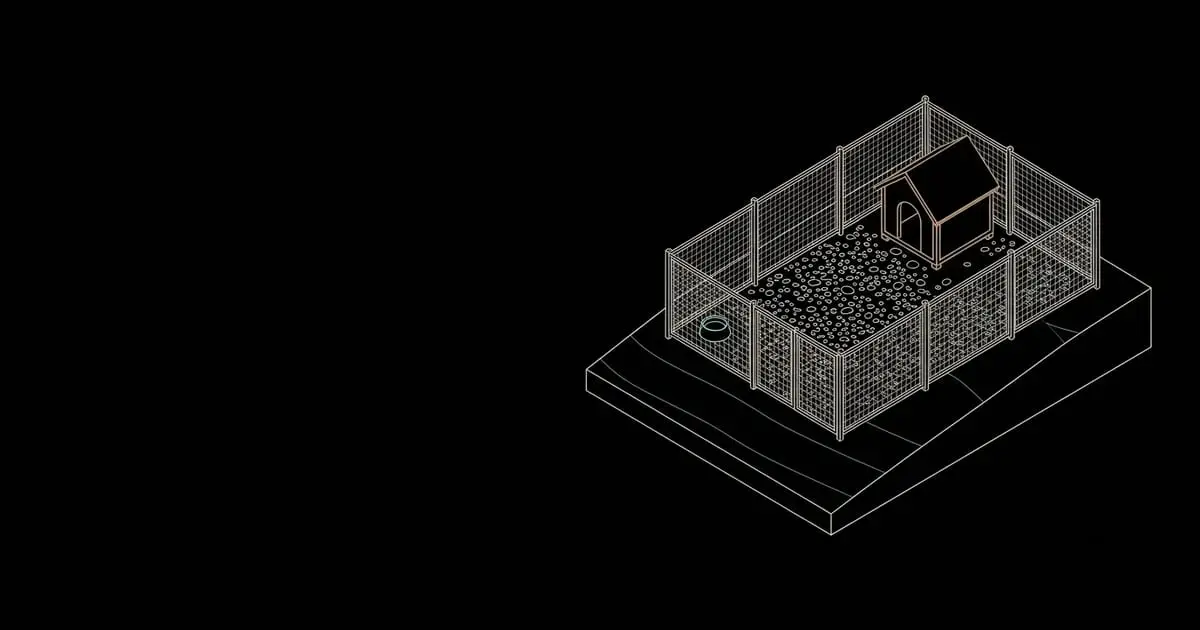
Pea gravel is a favorite for dog runs because it drains, it’s easy on paws and you can hose it off. Get the base and the slope right and it stays usable year round, without the mud of a worn lawn. Here’s how, with numbers. For your own run, use the pea gravel calculator.
Why pea gravel for a dog run?
| Pros | Cons |
|---|---|
| Rounded stones are gentle on paws | Gets hot in full sun |
| Drains fast, no mud | Some dogs dig in it or try to eat it |
| Easy to rinse | Smell builds up without regular rinsing |
| Cheap to install and top up | Stones get carried out of the run |
If your dog likes to eat stones, pea gravel isn’t the right surface. Ask your vet if you’re unsure.
Best size and depth
- Size: about 3/8 inch pea gravel. It is the common size sold as pea gravel. See what size is pea gravel.
- Depth: about 3 inches. That covers the base where dogs run their usual laps and turns.
What to put under pea gravel in a dog run
A dog run needs to drain both rain and urine. The build:
- Slope: about 1/4 inch per foot (2%) toward a lawn edge, drain or gravel trench, away from the house.
- Fabric: landscape or drainage fabric over the soil. It stops the gravel sinking into mud.
- Base: 2 to 4 inches of compacted crushed stone or coarse sand. This is the drainage layer.
- Top: 3 inches of pea gravel.
Some owners leave out the fabric so urine soaks straight into the ground and can be flushed away. It drains well but the gravel mixes into the soil faster and weeds come through. Fabric plus a good base is the more durable option. Learn more in landscape fabric under gravel.
How much pea gravel for a dog run
| Run | Depth | Cubic yards (+10%) | Tons (1.4 t/yd³) | Bags of 0.5 cu ft |
|---|---|---|---|---|
| 6 × 30 ft side yard | 3 in | 1.83 | 2.57 | 99 |
| 10 × 20 ft | 3 in | 2.04 | 2.85 | 110 |
Worked example: 10 × 20 ft run
- Area: 10 × 20 = 200 sq ft.
- Volume at 3 inches: 200 × 3 ÷ 12 = 50 cu ft (1.85 cubic yards).
- Add 10%: 55 cu ft, which is 2.04 cubic yards.
- Bags: 55 ÷ 0.5 = 110 bags, or about 2.85 tons in bulk.
The calculator also counts the fabric rolls and edging (60 ft around this run) and compares bag and bulk prices.
Edging and fencing
Dogs push gravel to the edges as they run. Use a solid border: pressure-treated timbers, steel edging or a concrete curb under the fence line. Run the fabric up the inside of the border. Ideas in gravel edging ideas.
Cleaning a pea gravel dog run
- Daily: pick up solid waste with a scoop.
- Weekly: hose down the whole run, starting at the high end so water flows toward the drain side.
- Spot treat urine areas with water or an enzyme cleaner made for outdoor pet areas.
- Yearly: rake, remove the dirtiest top layer and add fresh stone.
More detail in how to clean pea gravel.
Heat and comfort
Pea gravel in full sun can get hot on summer afternoons. Shade sails, a tree, or a raised dog bed in one corner gives your dog somewhere cool to lie. Lighter colored gravel stays cooler than dark gravel. See pea gravel colors.
Common mistakes
- No slope, so urine pools in one spot and smells.
- Gravel straight on clay soil, which turns to mud under the stones.
- Too thin, so the base shows where dogs run laps.
- No border, so the run spreads into the lawn.
The short version
Slope the ground, lay fabric and a crushed-stone base, then add about 3 inches of 3/8 inch pea gravel. A 10x20 ft run needs about 2 cubic yards. Plug in your own size in the pea gravel calculator.