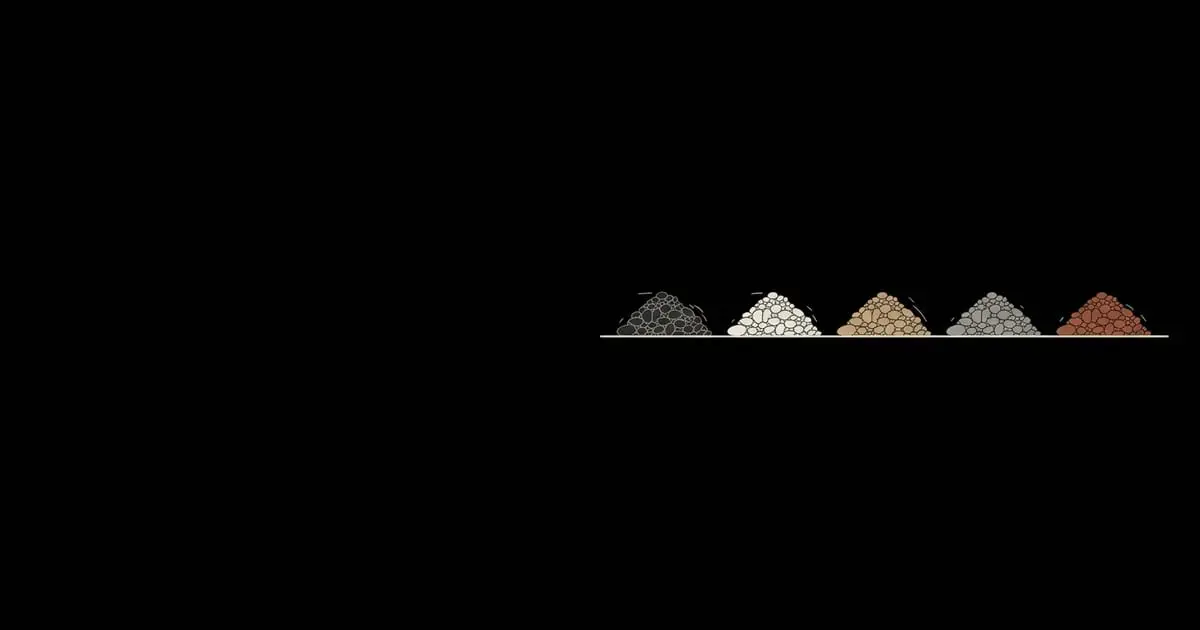
Picking a pea gravel color is a design choice that you live with for years, so it’s worth getting right. This guide compares the common colors on looks, heat and upkeep. The good news for your budget: color doesn’t change how much you need. The pea gravel calculator works for any of them.
Pea gravel colors compared
| Color | Looks best with | Heat in sun | Shows dirt | Notes |
|---|---|---|---|---|
| Mixed tan / river | Most houses, cottage and natural gardens | Medium | Hides it well | The classic, cheapest option in many areas |
| White | Dark siding, modern and Japanese gardens | Low | Shows it a lot | See white pea gravel |
| Black | Modern houses, steel edging, green planting | High | Shows dust and pale spots | Natural basalt or coated stone |
| Gray | Concrete, stone and gray homes | Medium | Hides it fairly well | Calm, neutral |
| Red / rust | Desert and Southwest styles, brick houses | Medium-high | Hides it well | Availability varies by region |
| Buff / gold | Warm-toned houses, Mediterranean styles | Medium | Hides it well | Glows in evening light |
Black pea gravel
Black pea gravel is the go-to for modern landscapes. It makes green plants pop, pairs with black steel edging and dark window frames, and gives a crisp, graphic look.
Things to know before you buy:
- Heat. Dark stone gets hot in summer sun. Not ideal for a dog run, a play area or a patio where people go barefoot.
- Natural vs coated. Natural dark stone like basalt keeps its color. Dyed or coated stone can fade or chip, showing a lighter stone underneath. Ask the seller.
- Dust and mineral spots. Black shows pale dust and hard-water spots from sprinklers.
- Wet look. Many black stones look darker and richer when wet, which is nice in a rain garden or near a water feature.
Mixed tan and river tones
This is “regular” pea gravel in many parts of the US: a mix of tan, brown, white, gray and rust pebbles. It is often the cheapest option, the easiest to match when you top up, and the best at hiding dirt and leaves. If you’re unsure, start here.
Gray, red and buff
- Gray works with concrete, gray stone walls and cool-toned houses.
- Red or rust fits Southwest and desert gardens and brick homes. It can be harder to find.
- Buff or gold warms up beige and cream houses.
Mixing colors
- Two-tone paths: a band of black along the edges with tan in the middle, separated by steel edging.
- Pavers in contrast: dark pavers in light gravel, or light pavers in dark gravel.
- Beds vs paths: a darker stone in planting beds and a lighter one on paths so people can see where to walk.
Before you buy: check in real light
- Get a sample or look at the pile at the yard, not a photo online.
- Wet it. Most stone looks darker wet. Decide which look you’re buying for.
- Check size. Colored pea gravel may not be the same size as regular pea gravel. See what size is pea gravel.
- Ask about weight. Different stone types weigh different amounts per yard, which matters if you buy by the ton.
How much colored pea gravel do you need?
The math is the same for every color: cubic yards = square feet × depth (in) ÷ 324.
| Depth | 1 cubic yard covers | Bags of 0.5 cu ft per 100 sq ft |
|---|---|---|
| 2 in | 162 sq ft | 34 |
| 3 in | 108 sq ft | 50 |
Decorative colors often cost more per bag or per ton, so order close to what you need, plus about 10%. If your supplier sells by the ton, enter their tons-per-yard figure as a custom weight in the calculator.
The short version
Mixed tan is the safest choice. Black is modern but hot and dusty-looking; white is bright but shows dirt. See the stone wet and dry before you buy, and get your amount from the pea gravel calculator.