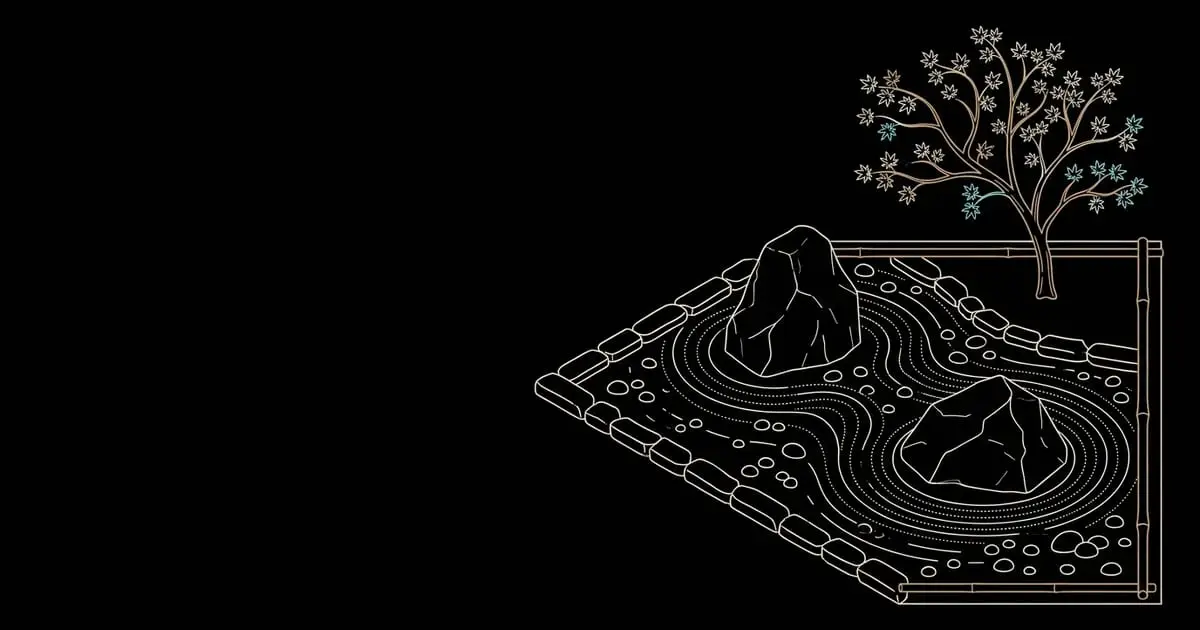
White pea gravel gives a garden a clean, bright, finished look. It is popular in modern landscapes, Japanese-style gardens and around dark-sided houses. Before you buy it, it helps to know what you’re getting, where it looks good, and how to keep it from turning gray. For quantities, the pea gravel calculator works the same for every color.
What is white pea gravel?
“White pea gravel” is a sales name, not a stone type. Under it you’ll find:
| What it is | Look | Notes |
|---|---|---|
| Natural pale river gravel | Off-white, cream, some gray and tan | Rounded naturally, the most “pea gravel” look |
| Tumbled marble | Bright white, smooth | Brighter, can be a little chalky |
| Quartz or quartzite pebbles | White to clear, sparkly | Hard and durable |
Ask the seller which stone it is. It changes the color, how bright it stays and sometimes the weight per yard.
White pea gravel vs white marble chips
| Feature | White pea gravel | White marble chips |
|---|---|---|
| Shape | Rounded | Angular |
| Size | About 3/8 in | Often 1/2 to 1 in |
| Underfoot | Comfortable, shifts | Firmer, sharper |
| Brightness | Soft white | Very bright white |
| Best for | Paths, beds, sitting areas | Beds, borders, decorative areas |
Marble is calcium carbonate. Some gardeners avoid it near acid-loving plants like azaleas and blueberries, because it can slowly raise soil pH as it weathers.
Where white pea gravel looks best
- Against dark backgrounds: black or charcoal siding, dark mulch, dark pavers.
- Modern gardens with clean lines, steel edging and architectural plants.
- Japanese-style gardens with rocks, moss and a raked gravel area.
- Paths at night, where the light stone shows up better.
Think twice in:
- Shady, damp corners, where algae and moss turn it green.
- Under trees, where leaves stain it and need constant removal.
- Full afternoon sun next to windows, where bright stone throws a lot of glare.
How to keep white pea gravel white
- Lay landscape fabric underneath so soil doesn’t mix in. See landscape fabric under gravel.
- Edge it so dirt from the lawn and beds stays out. See gravel edging ideas.
- Rinse new stone before you spread it to wash off dust.
- Blow leaves off before they break down.
- Rake and turn it now and then to bring cleaner stones up.
- Top up with fresh stone every few years.
How much white pea gravel do you need?
Color doesn’t change the math. Use cubic yards = square feet × depth (in) ÷ 324.
Example, a 10 × 20 ft area at 2 inches:
- Volume: 200 × 2 ÷ 12 = 33.3 cu ft (1.23 cubic yards).
- Add 10%: 36.7 cu ft, which is 1.36 cubic yards.
- Bags: 36.7 ÷ 0.5 = 74 bags of 0.5 cu ft.
White and decorative stones often cost more than plain mixed pea gravel, so getting the amount right matters. If you buy by the ton, ask the supplier how many tons are in a yard of their white stone and enter it as a custom weight in the calculator.
Depth by use
| Use | Depth |
|---|---|
| Decorative bed or border | About 2 in |
| Path or sitting area | 2 to 3 in over a base |
| Between stepping stones | About 2 in |
The short version
White pea gravel is a sales name for small, round, pale stone: natural river gravel, tumbled marble or quartz. It looks best in sunny, low-leaf spots against dark surroundings, and stays brighter with fabric, edging and a rinse now and then. Work out your amount with the pea gravel calculator.